First load may take longer
If loading takes too long, try refreshing

Hello, music lover
This tutorial is for complete beginners. For advanced, systematic theory, see Libre Music Theory
You are probably better at music than you think; music is an innate human ability. Without systematic drawing lessons it’s hard to sketch with correct perspective, yet after hearing a song you can hum it back, notice when it’s off-key—superpowers you were born with. A little basic theory unlocks even more of them! So don’t worry about “Do I have talent?” You already do.
What is music theory?
Composing isn’t a lightning strike of genius where pretty notes pop out of thin air. Those “pretty” sounds follow patterns, and “music theory” is humanity’s summary ofwhat sounds good. Imagine a story: someone once clanged a hammer on an anvil—ding, ding, ding—
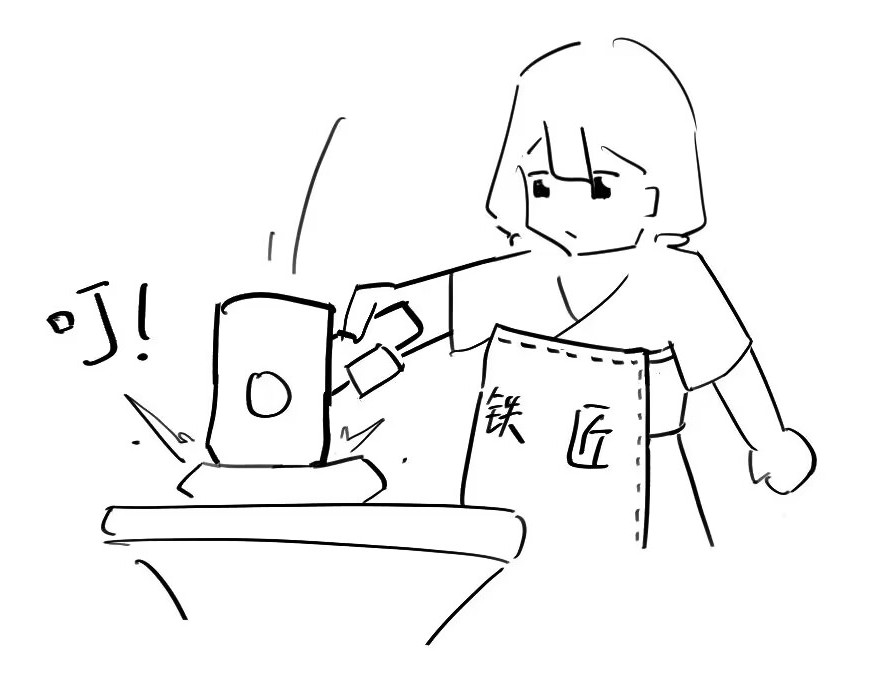
A passer-by liked the sound, memorized it, went home and tried it himself. He noticed different-sized metal gave different pitches, and that certain combinations sounded great. People slowly uncovered the rules—like “if this pitch is 1.06× the frequency of that one, it feels nice.” Generation after generation distilled such findings into modern music theory. So theory is just acodified guide to good-sounding notes. We don’t need to ask why they please the ear; we can simply stand on giants’ shoulders and use what they discovered.
Is theory really necessary?
A healthy musical value system matters. Music offers one of the best cost-to-joy ratios of any cultural pastime, yet listeners digest maybe 20 % of the care creators pour in. Learn a bit of theory and the same song becomes a new experience: you’ll spot clever arrangements, playful echoes—“that odd-but-cool spot is a modulation; here it morphs into another key.” For creators, your work is understood and appreciated; for listeners, rational insight multiplies the fun and may even let you write simple pieces yourself.
But I hope deeper knowledge won’t turn you into a snob. Aim to find sparkle in any track, thinking “that phrase is actually neat” instead of :
“This song is trash, skip.” ×
“It’s so-so, but that melodic twist is nice, and the instrumentation here is clever.” √
If learning theory makes you build hierarchies and saps the joy from music, you might as well skip it. Good tasteshould be downward-compatible.
May theory become the key that lets you step deeper into musical beauty, not a blade that cuts others. Learn, explore, embrace what you love; one late night, silhouetted over your desk, or in a hesitant yet decisive touch of a key, you may suddenly hear the echo of your passion.
Next we enter the formal concise theory course. Welcome, you who are willing to give music your time!
First listen to the little phrase we’ll build by the end; hit play:
The original phrase comes from the band Chilichill.
The demo’s rhythm and timbre differ slightly from the original for clearer study.
Next, we move to the cornerstone of music—Scales ➡️/post/basic/scale